
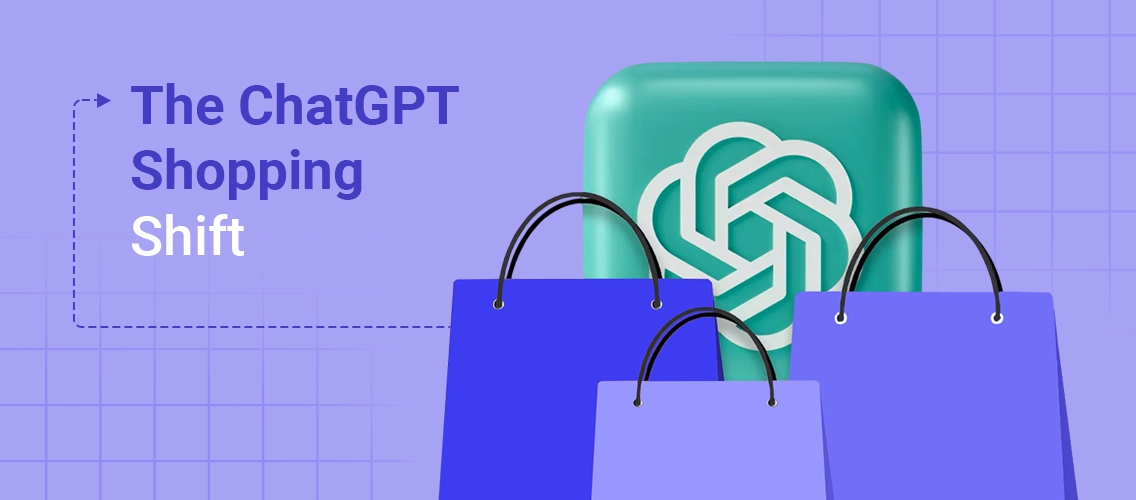


ChatGPT shopping is changing how people approach online buying decisions.
Instead of starting with search results or category pages, buyers are beginning with questions.
They describe what they need, the situation they are in, and the outcome they want. From there, choices are narrowed through conversation, not clicks.
For web to print businesses offering customizable print, packaging, and personalized products, this shift is significant.
These products already depend on explanation, options, and context to make sense.
As conversational discovery takes the lead, ChatGPT shopping starts to behave like a storefront.
One that helps buyers compare and decide before they ever reach a product page.
- This change is no longer isolated.
- Search and conversation are now connected.
- And web-to-print stores need to understand what that connection means for how their products are discovered.
What Is ChatGPT Shopping and Why It Matters for eCommerce
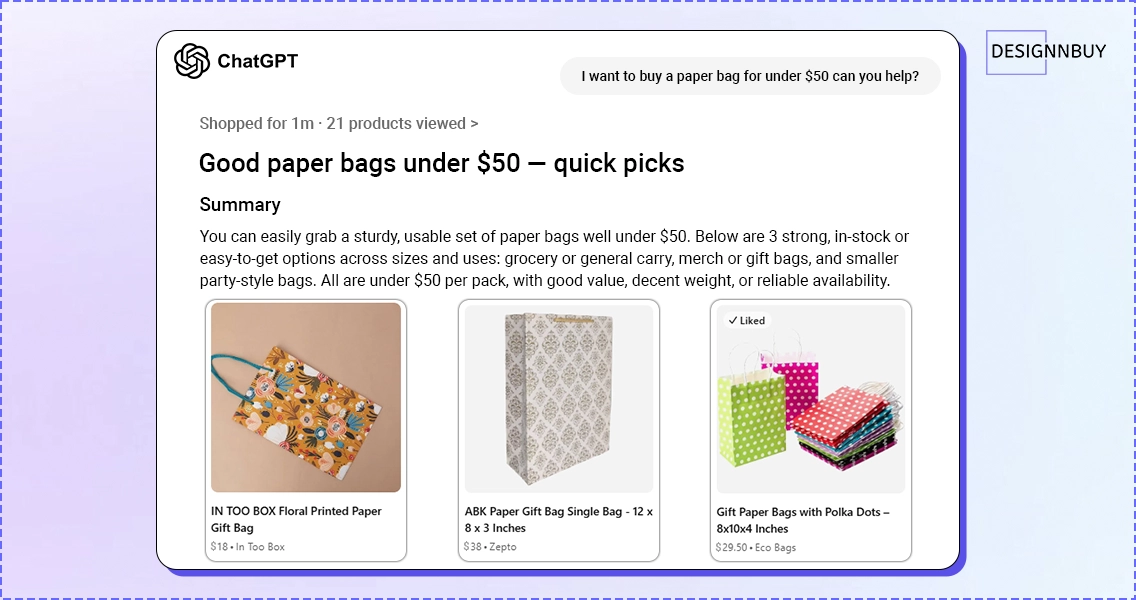
Here’s the short answer: people no longer browse first. They ask first.
ChatGPT shopping is not just another search experience. It changes how decisions are made.
Instead of opening category pages or scrolling product grids, users describe what they need in their own words, often using prompts to guide the conversation.
They talk about use cases, quantities, materials, or deadlines.
ChatGPT listens to that context and responds with suggestions that already narrow the choice.
Now, here’s where it gets interesting; this is very different from how Google Shopping works, as explained in OpenAI’s overview of conversational AI–driven shopping experiences.
Google Shopping shows listings. Whereas ChatGPT shopping gives recommendations and explains why one option fits better than another.
That explanation layer matters. It moves the decision upstream.
Instead of comparing products on your website, users often reach a conclusion inside the conversation itself. By the time they visit a store, they already know what they want.
If your product requires explanation, options, or context, ChatGPT favors it.
And that is exactly why this shift matters for e-commerce, especially for web-to-print businesses.
Why Web-to-Print Products Are a Natural Fit for ChatGPT Shopping
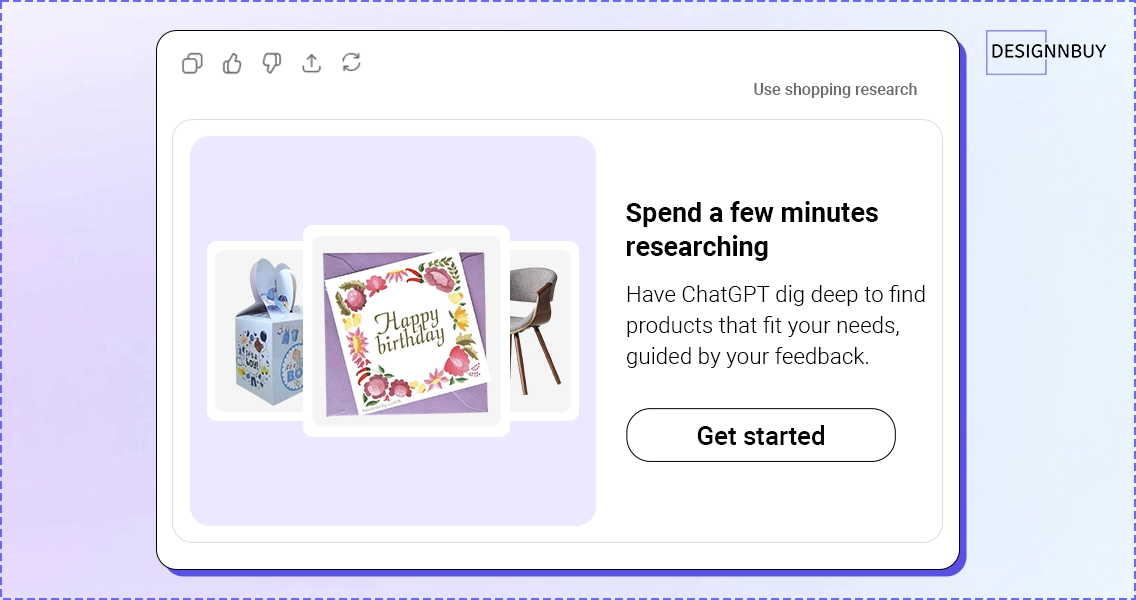
Web-to-print products are rarely simple purchases. They involve choices, and those choices affect the outcome.
A buyer has to decide on size, quantity, material, and finish. Often, they also need to think about usage.
- Is this for retail?
- Shipping?
- A short run or bulk production?
This is where many buyers pause. They are not looking for more products. They are looking for guidance.
Now, this is important. ChatGPT works best in exactly these moments.
AI product discovery performs well when products need explanation.
It struggles with impulse buying. But web-to-print products are not impulse-driven.
Personalized products depend on context. The right option changes based on need, not just price. ChatGPT can process that context and narrow choices logically.
A buyer might ask
- Which material suits premium packaging.
- Or which size works for a specific use case.
ChatGPT responds by connecting those needs to clear options.
That makes a web-to-print store a natural fit for conversational discovery. The products already rely on configuration and clarity.
ChatGPT simply becomes the layer that explains those choices.
ChatGPT as a Digital Storefront (Not Just a Traffic Source)
Up to this point, one thing is clear.
ChatGPT is not sending people on a browsing journey. It is shaping decisions before browsing even begins.
This is a big shift.
Traditional storefronts depend on structure.
- Category pages guide users.
- Filters narrow choices.
- Ads push visibility.
That model assumes buyers are willing to explore. And many still are.
But conversational commerce works differently. It starts with intent, not navigation.
Now, you might be wondering how this changes the role of a storefront.
The answer is simple. The storefront is no longer just a destination.
ChatGPT becomes the place where discovery happens.
- It handles early comparison.
- It answers, “Which option should I choose?” before the buyer reaches a product page.
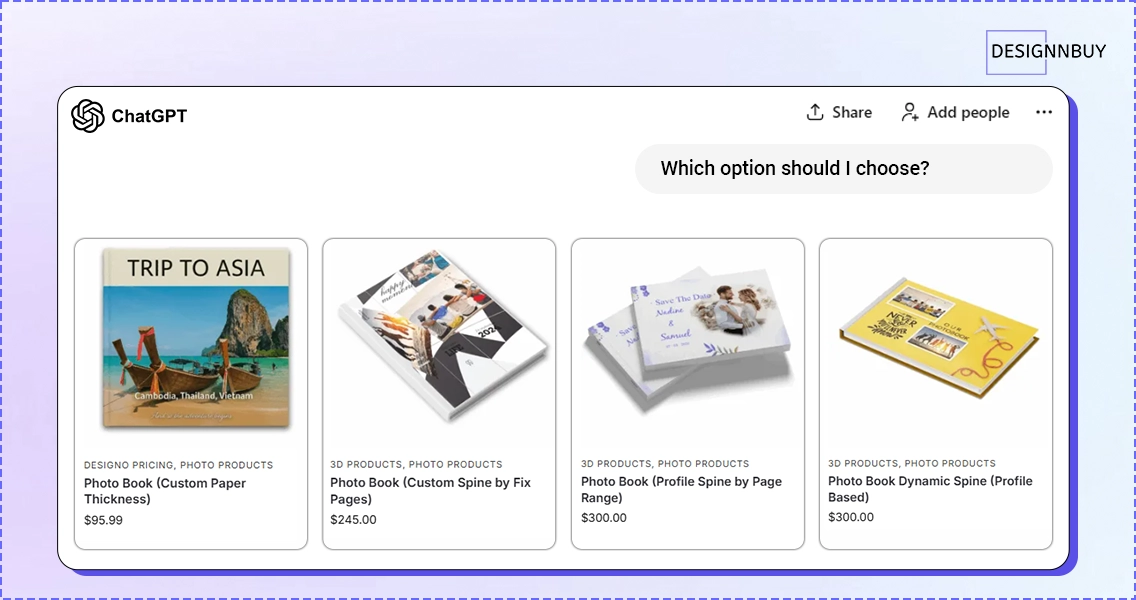
This does not remove your homepage or product pages. It changes their job.
- Instead of convincing, they confirm.
- Instead of educating, they validate.
Trust plays a bigger role here. If ChatGPT cannot clearly explain your product, it will move on. If it can, your store becomes part of the conversation.
That is why ChatGPT should be seen as a digital storefront.
Not because it replaces your site. But because it reshapes how buyers arrive there.
How to Show Up on ChatGPT Shopping as a Web-to-Print Store
Once ChatGPT starts acting like a storefront, the focus shifts.
Visibility alone is no longer enough. What matters is how clearly your products can be explained inside a conversation.
This is where a web to print storefront either stands out or disappears. Not because of price or design. But because of the structure.
1. Make Your Products Easy for AI to Understand
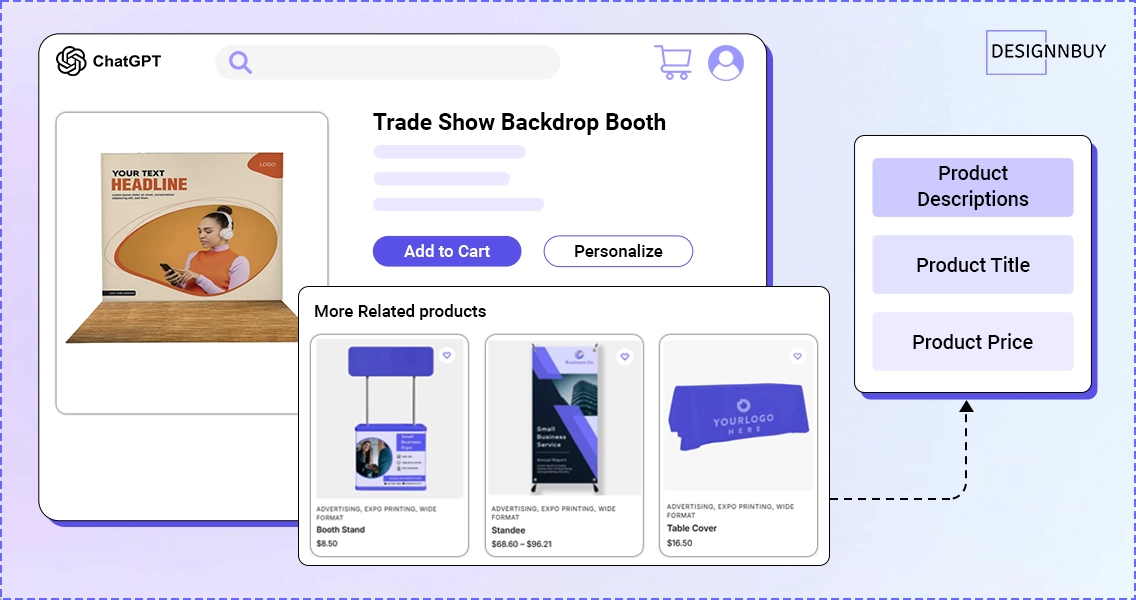
ChatGPT can only work with information it understands. That begins with how products are defined.
Product titles should reflect real use cases. Not internal naming or technical shorthand.
Descriptions should explain what the product is for before listing details.
Think about how buyers frame their questions. Then match that language.
When products are written clearly, ChatGPT can connect them to the right intent.
That improves how your store shows up in conversational discovery.
2. Structure Product Options & Variants Clearly
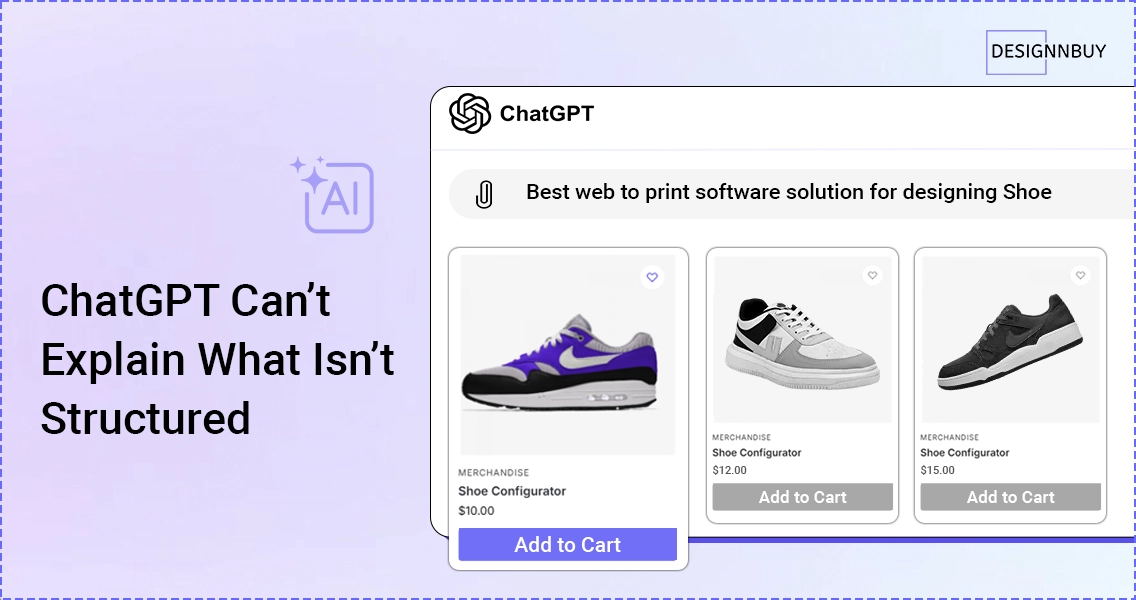
This is where clarity often breaks down. Options exist, but the logic is scattered.
Sizes, materials, finishes, quantities, and personalization steps should follow a fixed order. The same order should repeat across products.
There’s a reason for this.
ChatGPT looks for patterns.
- When variant logic is consistent, choices are easier to explain.
- When it is not, recommendations lose precision.
- Clear structure supports AI product discovery.
It also makes the buying experience smoother once users reach your site.
3. Prioritize Accuracy Over Marketing Copy
This part cannot be overlooked.
- Prices must be clear.
- Turnaround times must be realistic.
- Production limits must be visible.
ChatGPT avoids uncertainty.
If details feel vague, it will hesitate to recommend the product.
Strong marketing language does not help here. Clear, factual information does.
When your data is accurate, ChatGPT can build trust for your store. And trust keeps your products in the conversation.
From Search Results to Conversations: The Shift in Product Discovery
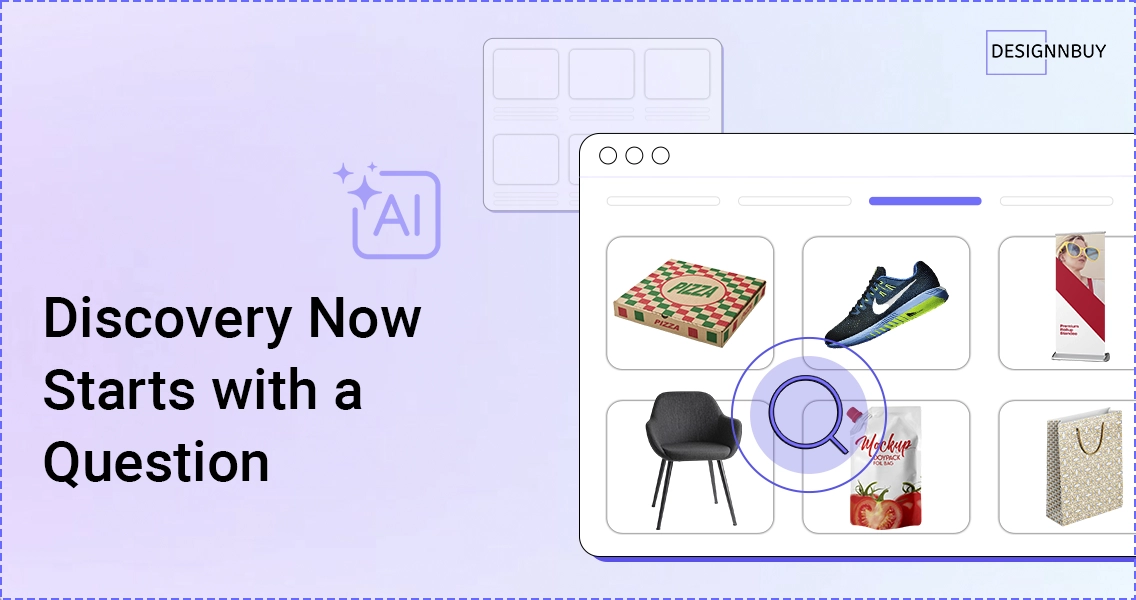
For a long time, product discovery followed a fixed path. Buyers searched, clicked, browsed, and then decided.
That path still exists. But it is no longer the starting point for many buyers.
When ChatGPT enters the picture, discovery begins with a question.
- Not a keyword.
- Not a filter.
Instead of jumping between product pages, users compare options inside a conversation. They narrow choices before visiting a store.
This changes where decisions happen. The comparison moves upstream.
Earlier, product pages handled discovery and evaluation together. Now, ChatGPT handles the early evaluation. Product pages confirm the choice.
To see the difference clearly, the shift looks like this:
- Earlier flow:
- Search → Click → Browse → Decide
- New flow:
- Ask → Compare → Decide
This matters for web-to-print stores.
Buyers often reach the site with a decision already formed.
- They are no longer exploring.
- They are validating.
That is why product data and structure carry more weight than ever. If ChatGPT cannot compare your options clearly, your store is left out early.
And once excluded, it rarely re-enters the decision.
What “ChatGPT for eCommerce” Really Means for Print Sellers
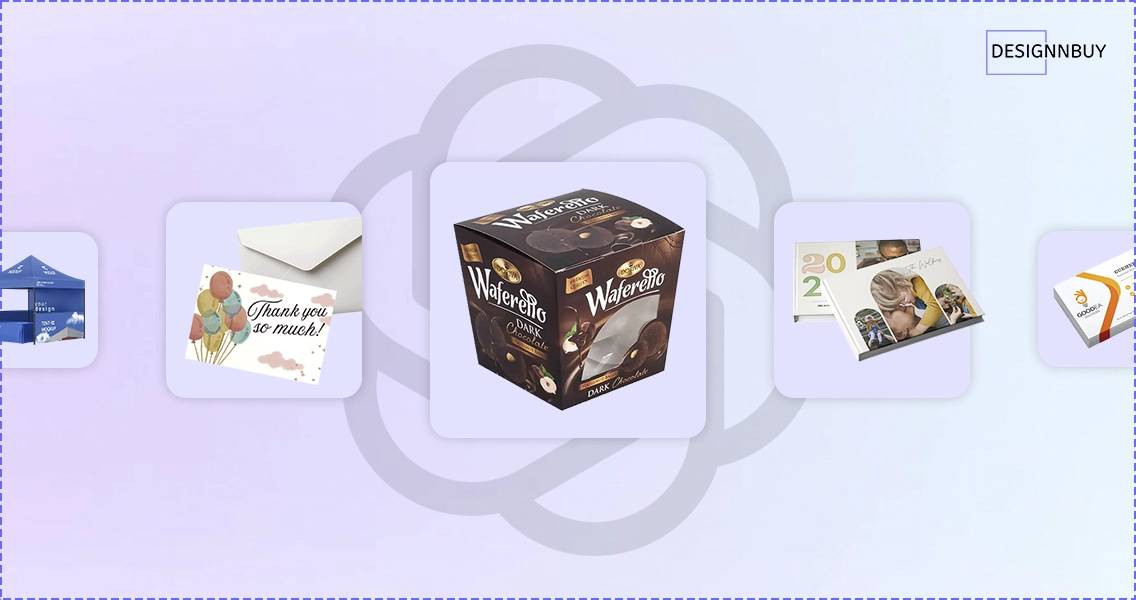
This shift in discovery brings a practical question to the surface.
What does this change actually demand from print sellers?
The answer is not a new storefront or a new channel. It is a new role inside the buying journey.
ChatGPT for eCommerce is not about replacing your web-to-print store. It is about making that store easier to discover and easier to explain.
Three things matter most here.
- First, discoverability.
Your products must be visible in conversations, not just in search results.
That depends on clear product data and a consistent structure. - Second, explainability.
ChatGPT needs to describe your products in plain language.
If options or rules are unclear, explanations break down. - Third, trust.
Pricing, turnaround time, and constraints must be accurate.
Trust is built through clarity, not persuasion.
When these elements work together, ChatGPT becomes a guide rather than a gatekeeper.
It helps buyers arrive with confidence. Your store then completes the transaction.
For print sellers, this is the real meaning of ChatGPT for e-commerce.
Not visibility alone, but readiness for conversational decision-making.
Preparing Your Web-to-Print Store for the Next Discovery Layer
All of this points to one clear requirement. Your store has to be ready before the conversation starts.
That readiness does not come with adding more pages. It comes by cleaning up what already exists.
- Product data needs to be complete and consistent.
- Titles, descriptions, and options should follow the same logic across products.
No gaps. No contradictions.
Configuration rules must stay stable across channels. What works on your site should work the same way when explained elsewhere.
This consistency allows conversational interfaces to stay accurate.
Flexibility also matters. As AI-driven interfaces evolve, rigid setups fall behind.
Stores that can adapt to their product logic will stay visible.
This is not a future-only concern. It is a present requirement.
Web-to-print stores that prepare now will fit naturally into AI commerce flows.
Those who delay will struggle to re-enter once patterns are set.
The Storefront Has Already Shifted
By now, the pattern is clear. ChatGPT shopping is no longer an idea on the horizon.
It is already shaping how buyers discover and decide.
For web-to-print stores, this shift is not a threat. It is a natural extension of how these products are sold.
Custom print and personalized products rely on explanation. They depend on clear options and context. That is exactly what conversational commerce supports.
The stores that adapt will not chase visibility. They will earn it through structure and clarity. Getting Your Store Ready for What’s Next?
In this new discovery layer, the storefront is no longer just a page. It is the conversation that leads buyers there.
Getting Your Store Ready for What’s Next?
Create product experiences that are easier to explain, compare, and choose.
Frequently Asked Questions
ChatGPT Shop is not a traditional marketplace.
It is a conversational space where users explore products by asking questions.
The ChatGPT Shopping feature explains options and helps users decide without browsing product grids.
To show up on ChatGPT Shopping, your product information must be clear and structured. Titles, descriptions, options, and pricing should follow a consistent order.
ChatGPT Shopping works best when it can easily understand what a product is, who it is for, and how choices differ.
In some cases, yes.
ChatGPT Shopping can guide users from discovery to purchase-ready decisions.
Users may either be sent to a product page or see checkout options inside the experience.
Most of the purchase journey often happens before users reach the store.
ChatGPT shopping research helps users compare products through conversation.
Users ask about price, fit, material, or use case.
ChatGPT processes that input and suggests relevant options that match the need.
A ChatGPT shopping assistant acts as a personal guide while shopping online.
It understands user intent, compares options, and explains choices.
For web-to-print products, this helps buyers feel confident before they decide.