
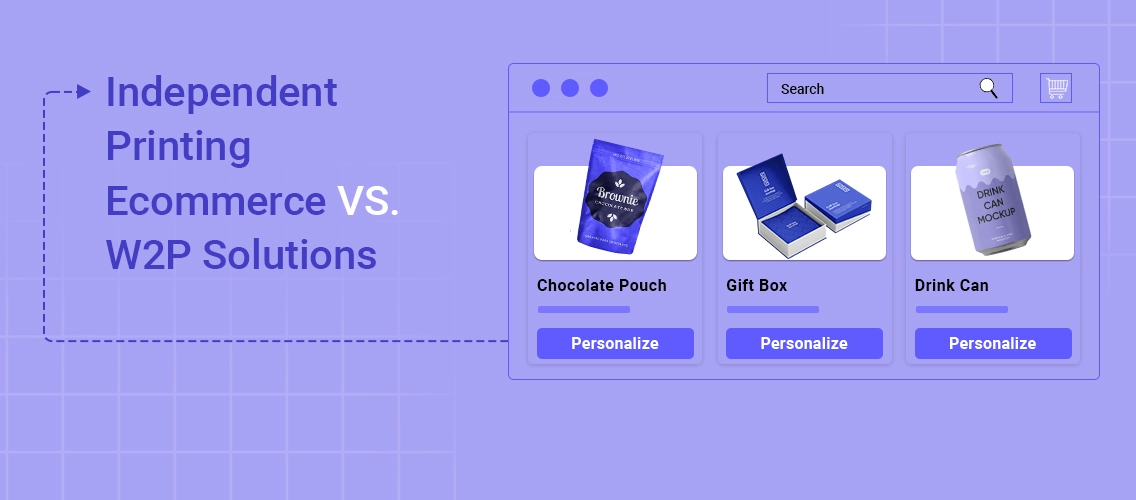


After working with thousands of printing companies, packaging businesses, and custom merchandise vendors over the past decade, I’ve noticed a fascinating trend: despite the convenience of all-in-one web-to-print platforms, the majority overwhelmingly choose to separate their eCommerce infrastructure from their personalization technology.
At first glance, this seems counterintuitive. Why manage two systems when everything could be bundled into one? The answer lies in the numbers — and those numbers tell a very clear story.
The Market Has Already Decided
Let me share some eye-opening data from BuiltWith that validates what we’ve been observing in the industry:
- 211,400 printing company websites globally
- 157,700 packaging business websites
- 895,145 custom t-shirt and merchandise websites
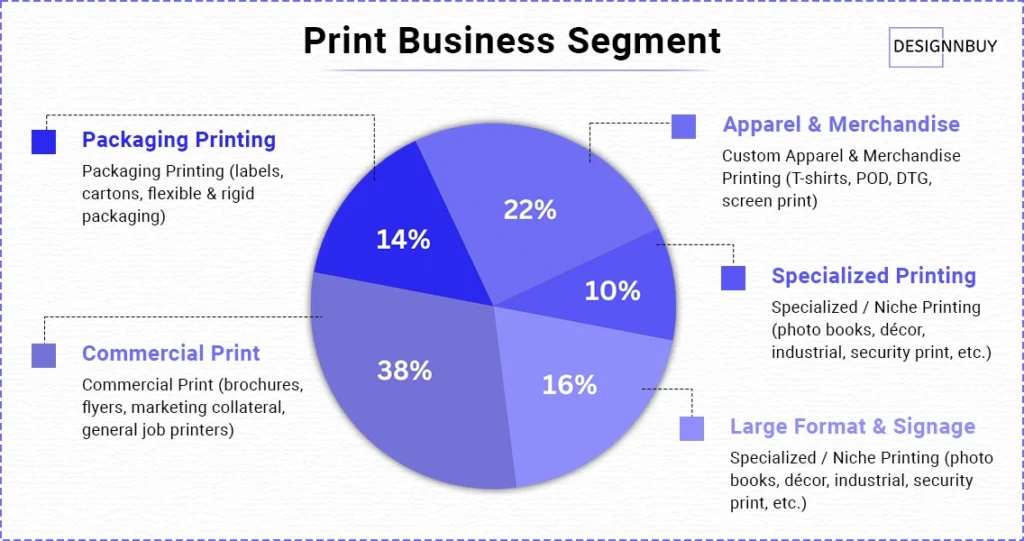
Now here’s what’s remarkable: when we analyze the eCommerce technology choices of these businesses, we see an unmistakable pattern.
Shopify currently leads the U.S. eCommerce market with about 30% share, followed by WooCommerce at roughly 20%. BigCommerce and Magento make up much of the remaining market.
Combined, these independent platforms run more than 80% of online stores — including most of the print and packaging businesses.
This isn’t a coincidence. It’s a deliberate strategic choice driven by clear business advantages.
Why the Industry Chooses Independent eCommerce Platforms
After analyzing this trend and speaking with hundreds of print business owners, I’ve identified four clear reasons why independent eCommerce platforms consistently win over bundled solutions:
1. Access to Thriving Developer Communities
When you choose Shopify, WooCommerce, or Magento, you’re not just selecting software—you’re joining a massive ecosystem of innovation.
Consider these facts:
- Shopify app store features over 8,000 third party apps.
- WooCommerce has more than 59,000 plugins available
Together, these platforms serve millions of merchants, creating powerful network effects.
What does this mean for your business?
Every day, thousands of developers are building new features, improving existing functionality, and solving problems you haven’t even encountered yet.
When Shopify releases a new AI-powered feature or WooCommerce adds advanced analytics capabilities, you benefit immediately—without waiting for your web-to-print vendor to catch up.
In effect, this developer community acts as your extended R&D department.
Need to integrate with a new payment gateway that’s popular in your target market? There’s already a plugin for that.
Want to add advanced customer segmentation? Multiple solutions exist, tested by thousands of other merchants.
In contrast, proprietary web-to-print platforms with bundled eCommerce rely on their internal development teams. Even the best teams can’t match the innovation speed and breadth of thousands of independent developers working in parallel.
2. Freedom from Vendor Lock-In and True Scalability
Here’s a scenario I’ve seen play out too many times: A printing company grows beyond its web-to-print platform’s eCommerce capabilities. Maybe they need advanced B2B features, sophisticated pricing rules, or integration with enterprise systems.
With a bundled solution, they face a painful choice—accept limitations or migrate everything, including their carefully configured personalization tools.
With separated systems, you have options:
- Flexibility to evolve your eCommerce independently
Your eCommerce platform can scale from handling 100 orders per month to 100,000 orders per month without touching your web-to-print integration. According to recent data, platforms like BigCommerce support businesses processing up to $50 million in annual online sales, while Shopify Plus powers stores generating hundreds of millions in revenue.
- Access to specialized developer talent
When you need custom development, finding Shopify or WooCommerce developers is straightforward. These platforms have vast talent pools—there are hundreds of thousands of certified developers globally. Try finding a developer specialized in a proprietary web-to-print eCommerce system, and you’ll understand the difference.
- Negotiating power
When your personalization technology and eCommerce platform are separate, you maintain leverage in both relationships. If your web-to-print provider can’t meet your needs, you can evaluate alternatives without disrupting your entire online operation.
3. Cost-Effective Innovation Through Ready-Made Solutions
Let me share a real calculation that illustrates this advantage.:
Imagine you need to add these features to your online store:
- Advanced email marketing automation
- Customer loyalty program
- Subscription billing for recurring orders
- Integration with your ERP system
- Advanced analytics and reporting
- Multi-currency support for international sales
Building these from scratch with a custom bundled platform could easily cost $50,000-$150,000 in development time. More importantly, it would take months to implement.
Using an established eCommerce platform and existing plugins, these features can be implemented in days or weeks, often for a few hundred dollars per month in subscription costs.
Industry data shows that the average Shopify merchant uses around six different apps to enhance their store’s functionality that would otherwise cost tens of thousands to build from scratch.
This difference compounds over time. Every year brings new technologies, new customer expectations, and new competitive requirements.
Independent eCommerce platforms evolve constantly through their ecosystems. As a result, competitors on these platforms gain access to features like AI-powered recommendations, voice commerce, and 3D product configurator — while others are still waiting for proprietary platforms to deliver basic updates.
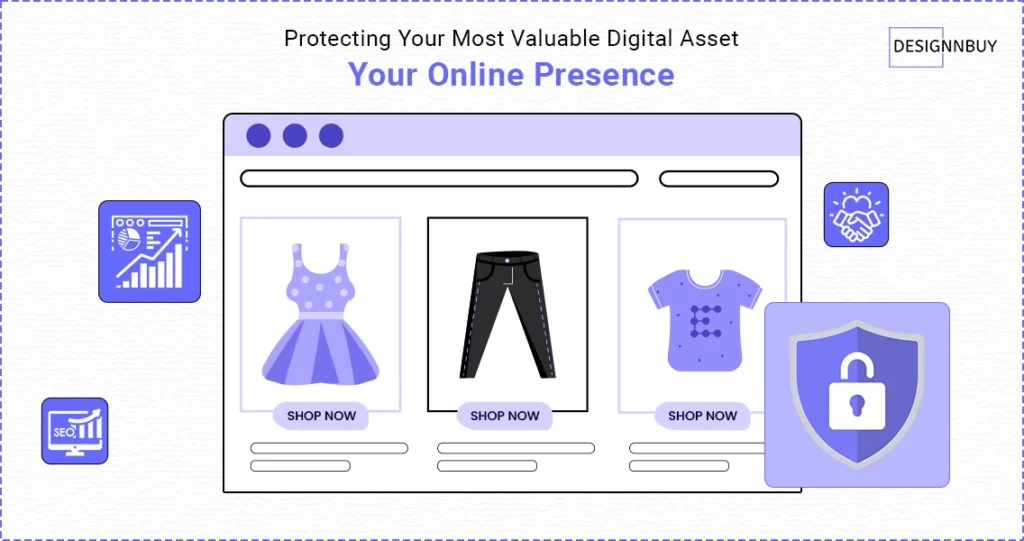
4. Protecting Your Most Valuable Digital Asset: Your Online Presence
Let me be direct about something crucial: your website traffic, SEO rankings, and customer relationships are often far more valuable than your technology stack.
Now, consider what happens if you need to change web-to-print providers:
With bundled eCommerce, you face a nightmare scenario! Switching your personalization technology means rebuilding your entire online presence. URL structures change. Redirects need to be recreated. Integrations must be reconfigured. Your SEO rankings—that are built over years—take a hit. Customer confusion during this transition leads to lost sales. Some businesses report traffic drops of 30-50% during major platform migrations.
With separated systems, your eCommerce platform remains untouched. Customer accounts, order history, payment information, saved carts, wishlists, and most importantly—your URL structure and SEO rankings—all remain stable. You’re simply swapping out the personalization technology in the background. Your customers might not even notice the change.
This “plug-and-play” architecture isn’t just convenient—it’s strategic risk management. According to data from web analytics firms, eCommerce sites take an average of 3-6 months to recover SEO rankings after major platform migrations. That’s 3-6 months of reduced visibility and sales.
By keeping your eCommerce platform independent, you avoid this risk entirely.
To know more about why you need to comply with Google Wen Vitals, click here to read our blog.
The Real-World Validation
Based on BuiltWith’s comprehensive web technology tracking – over 1 million print, packaging, and custom merchandise businesses operate online stores worldwide. The vast majority run on independent eCommerce platforms, with Shopify and WooCommerce holding the largest shares.
These aren’t unsophisticated businesses making uninformed decisions. Many are multi-million-dollar operations with experienced teams who have evaluated their options carefully. They’ve run the numbers, weighed the alternatives, and deliberately chosen separation. In effect, the market has voted with its wallet.
What This Means for Your Business
If you’re running a printing business, packaging company, or custom merchandise operation, this trend offers clear guidance:
- Start with a proven eCommerce platform: Choose Shopify, WooCommerce, BigCommerce, or Magento based on your specific needs. These platforms will give you immediate access to world-class eCommerce capabilities, extensive feature sets, and large developer communities.
- Integrate best-of-breed personalization technology: Select web-to-print software like DesignO that excels at what it does—enabling customers to customize products, generating print-ready files, and managing complex printing workflows. Look for solutions that integrate cleanly with your chosen eCommerce platform via plugins or APIs.
- Plan for the future: By separating these concerns from day one, you build a flexible foundation that can evolve as your business grows. You’re not betting on a single vendor’s vision or timeline—you’re leveraging entire ecosystems of innovation.
Design’N’Buy: Bridging eCommerce Platforms with Print and Personalization Capabilities
At Design’N’Buy, we’ve built our entire philosophy around empowering businesses to choose their own eCommerce platform while providing enterprise-grade personalization capabilities.
Our flagship solution, DesignO, transforms any eCommerce platform into a fully-equipped print, packaging, and product personalization powerhouse.
Here’s what makes our approach different: we let you keep the eCommerce platform that works best for your business—whether that’s Shopify, WooCommerce, Magento, BigCommerce, or even a custom solution—and DesignO plugs in seamlessly without disrupting your existing operations.
We fill all the critical gaps that standard eCommerce platforms have for print businesses –
- Professional design tools that enable customers to create complex customizations with ease
- Print-ready file generation that produces output your production team can use immediately
- Advanced template builders for creating product variations at scale
- Real-time quotation engines that calculate accurate pricing on-the-fly based on customizations
- 3D preview and visualization that lets customers see their personalized products before ordering
- Sophisticated pricing engines that support pricing per square unit, quantity tier pricing, page-based pricing, and many more complex pricing models
- Production workflow integration that connects your online orders directly to your manufacturing processes
The result? You maintain complete control over your eCommerce strategy while gaining enterprise-grade print capabilities—no compromises, no vendor lock-in.
The Bottom Line
The data is clear, and the market has spoken: independent eCommerce platforms plus specialized web-to-print integration beats bundled all-in-one solutions for most of the printing and packaging businesses.
You get access to massive developer communities driving continuous innovation. You maintain strategic flexibility and avoid vendor lock-in. You benefit from thousands of ready-made solutions instead of paying for custom development. And most importantly, you protect your most valuable digital assets—your online presence, customer relationships, and SEO authority.
At DesignNBuy, we’ve built our entire integration strategy around this principle. We focus on what we do best—providing powerful, flexible personalization technology—while integrating seamlessly with the eCommerce platforms our customers already know and trust. We’ve seen firsthand how this approach accelerates our clients’ growth and reduces their risk.
The question isn’t whether to separate your eCommerce from your web-to-print technology. The market has already answered that question.
The real question is: which eCommerce platform best fits your specific business needs, and how quickly can you get started?