



The design tool stopped being the moat (for the products that don't need one)
 Nidhi Agarwal
Blog article content
Almost 15 years ago, when I started working closely with printers, decorators and manufacturers, one thing became very clear to me: the ability to personalize a product could fundamentally change the economics of a business.
If you could let a customer customize a product, accept a single-unit order and still produce it profitably, you had something many of your competitors didn’t.
And at the centre of that experience was the online design tool.
Back then, a sophisticated product personalisation tool wasn’t simply another piece of software. It was a genuine business differentiator — a moat.
Companies such as VistaPrint, Custom Ink, MOO and many others showed what could happen when personalisation, e-commerce and on-demand production came together. Gradually, we went from personalising business cards and apparel to signage, promotional products, packaging and almost anything that could be printed or decorated.
But somewhere along the way, something changed.
The design tool stopped being the moat.
Not because it became less important, but because it became more common.
“When differentiation becomes expectation”
Technology has a habit of turning yesterday’s competitive advantage into today’s expectation.
Online personalisation used to be difficult to implement. Today, we have mature design engines, APIs, cloud infrastructure, image-processing technologies, automated production equipment and smarter machinery. At the same time, digital production has completely changed the economics of short runs.
Customers have changed too.
They don’t arrive at a website thinking, “I would like a product personalisation experience.”
They simply expect to upload an image, change some text, choose a size, see what the finished product will look like and buy one if that’s what they need.
That’s the shift!
That shift shows up in the numbers too. We tracked where print businesses are actually investing in our Web to Print Industry Report 2026
When everyone can offer personalization, personalization itself stops being the differentiator. Increasingly, the same is true of the design editor. So instead of asking:
“Do we have a powerful design tool?”
I think businesses should be asking:
“What happens before, around and after the design tool?”
Because that’s where I see the next wave of differentiation being built.
The opportunity is moving beyond the editor
For a long time, much of the innovation in web to print was concentrated around personalisation and editing. Now, I believe the bigger opportunity is to remove friction from the entire buying and production journey.
The winners won’t necessarily be the businesses with the longest list of editing features. They will be the ones that make it easier for a customer to go from “I want this” to “I have this” — quickly, reliably and without needing to understand all the complexity in between.
Here are a few areas where I see that shift happening.
Here's what that looked like for one of our customers before we get into the specifics.
Ribbons Galore's old setup could not handle an order with fifteen sashes and fifteen different award titles. We rebuilt configuration and print-ready output around the editor, not just the editor itself. Custom order errors dropped by around 70%. Read the full story
Making design expertise optional
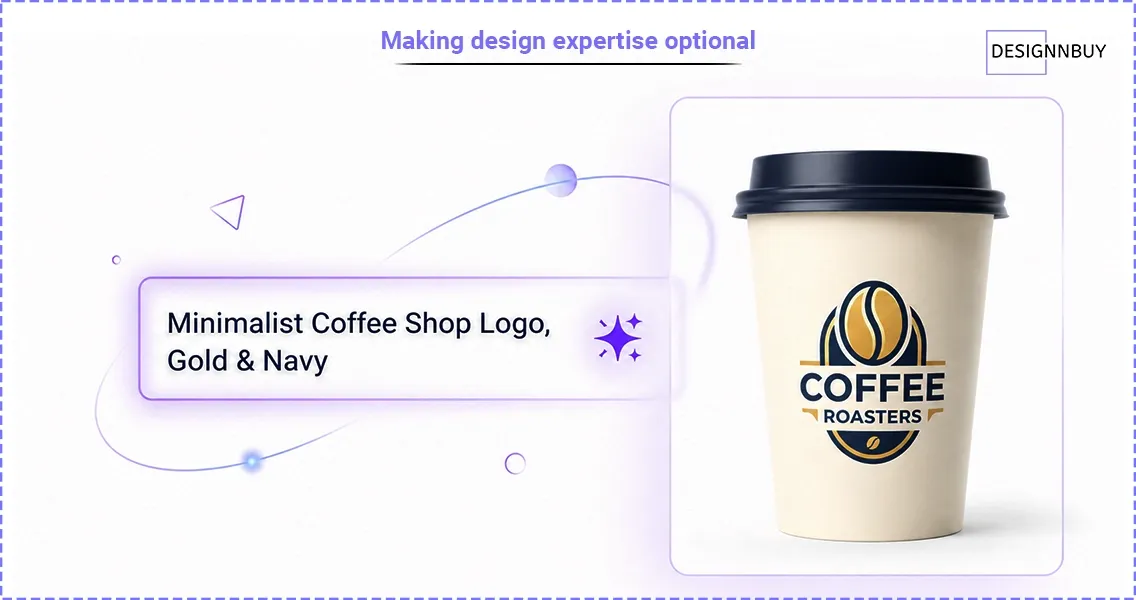 For years, the customer was expected to bring the artwork.
But what happens when they don’t have artwork? Or when they have an idea but no graphic design experience?
This is where AI is beginning to change the journey in a meaningful way.
Customers don’t necessarily need to hire a graphic designer or jump between multiple graphics applications just to prepare something that can be printed. Image generation, upscaling, background removal, object removal, face cutouts, image enhancement and automated corrections can increasingly happen within the same artwork editing experience.
For me, the interesting opportunity isn’t simply adding an “AI” button to a design tool.
It’s removing some of the expertise and friction that previously stood between an idea and a printable product.
The real question is:
Can a customer arrive with an idea — rather than finished artwork — and leave with something ready to produce?
That’s a much bigger opportunity than simply making an editor more sophisticated.
Making small-batch production a business model
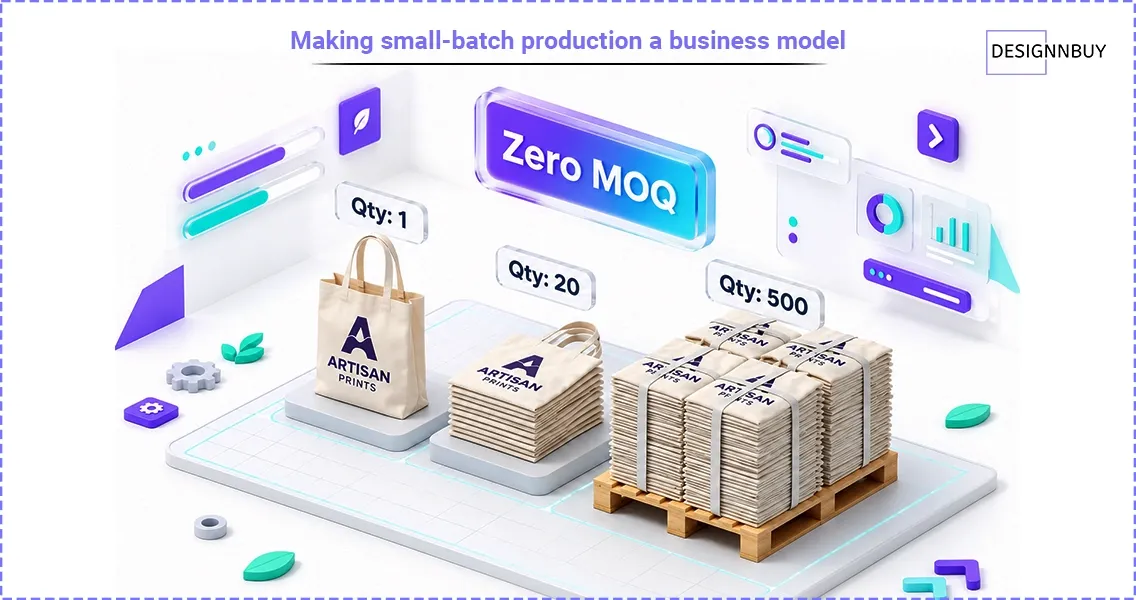 Personalisation made one-off production possible.
But today the more interesting question is shifting from:
“Can you produce one?”
to:
“Can you produce one profitably?”
Variable-data production, digital manufacturing and increasingly automated workflows are making smaller batches commercially viable. And that changes more than production.
A customer might want one customised product today, 20 tomorrow and 500 next month. If your infrastructure can support all three without forcing that customer through completely different processes, that flexibility itself becomes part of your value proposition.
Zero minimum order quantities can move from being a technical capability to becoming a customer acquisition and retention strategy. Production agility becomes part of the customer experience.
Making the preview part of the product
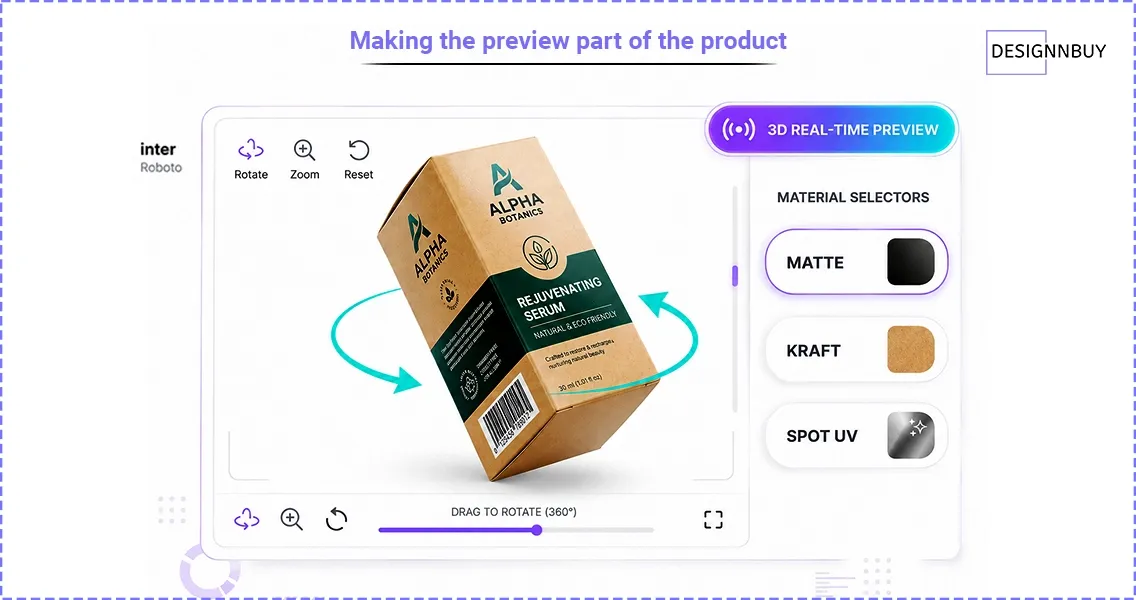 We’ve all bought something online and wondered: Will it actually look like this when it arrives?
That uncertainty becomes even greater with personalised products.
A static 2D representation isn’t always enough, particularly for packaging, signage, identity products, promotional and gifting products, displays and other products where shape, material and physical appearance matter.
Hyper-realistic 3D previews can help close that confidence gap.
The value isn’t simply in having a 3D viewer. It’s in reducing the distance between:
“I think this is what it will look like.”
and:
“I know what I’m buying.”
The closer we can get customers to that second feeling, the easier the purchase decision becomes.
Letting customers configure what can actually be manufactured
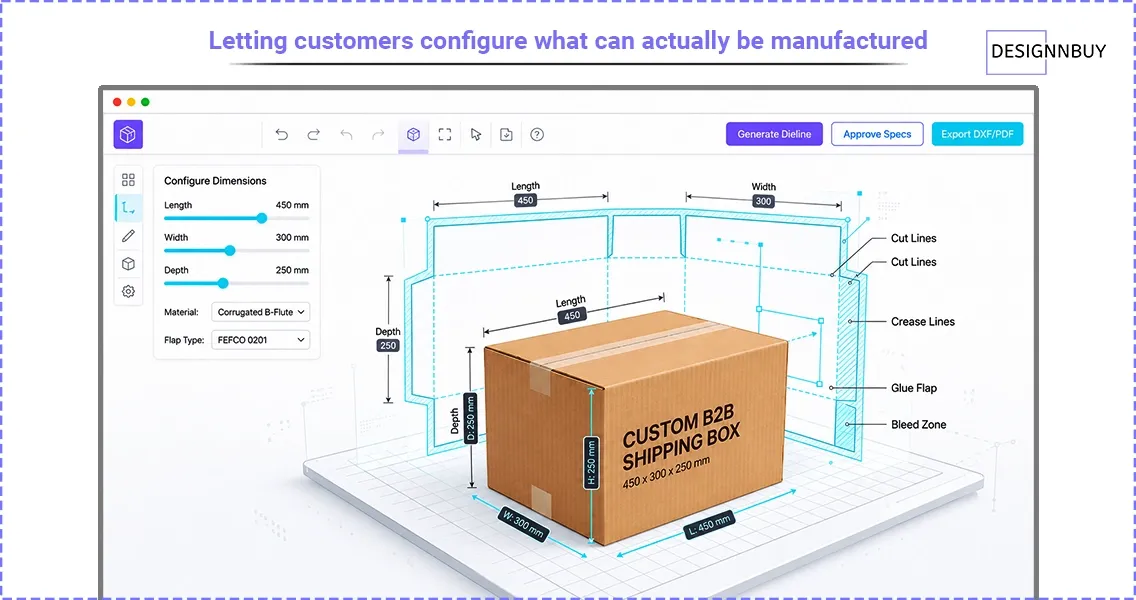 Personalization is relatively straightforward when every product follows the same rules. It gets much more interesting when the product itself is variable.
Think about packaging, labels, signage and wide-format products where dimensions may change based on what the customer enters. With parametric and dynamic configuration, the system can calculate dimensions, adjust artwork and generate the required production geometry at runtime.
The customer shouldn’t have to understand dielines, bleed areas or manufacturing constraints. They should be able to tell the system what they need and let the technology handle the complexity behind it.
That’s a very different definition of a design experience. It isn’t simply helping someone design something. It’s helping them configure something that can actually be manufactured.
Getting from a beautiful design to a printable one – auto color corrections and preflight
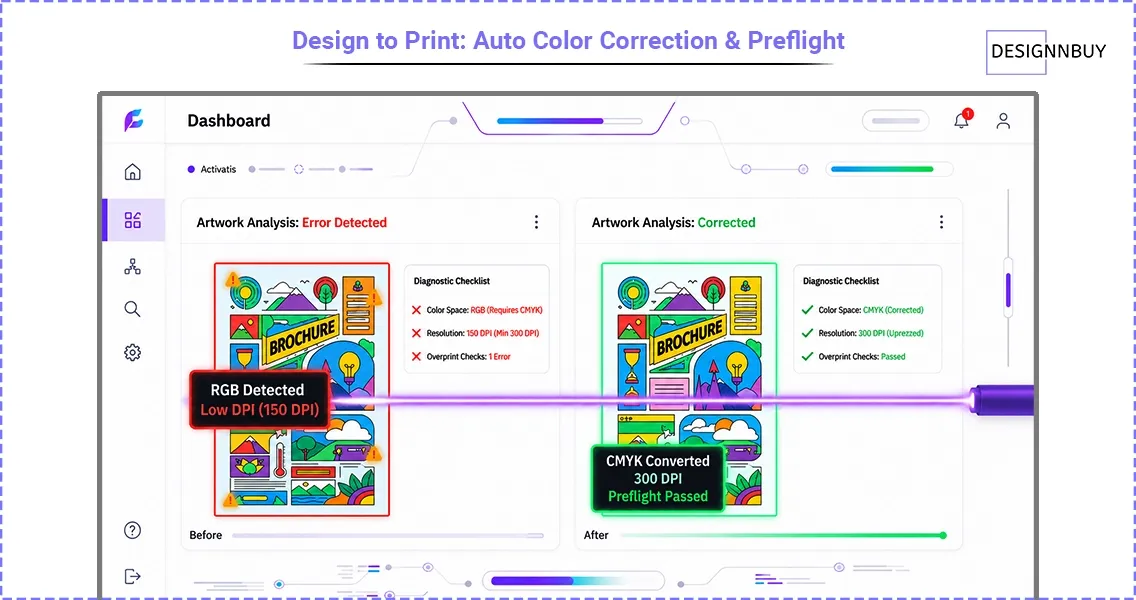 One of the challenges I’ve seen repeatedly in our industry is the gap between what looks right on a screen and what will actually work in production.
A customer can create something beautiful and still end up with an order that has problems because of image resolution, colour, transparency, fonts, bleed or any number of production constraints.
This is where preflight, automated corrections, CMYK and Spot colour support, output validation and production integrations become so important.
The objective is quite simple: Catch the problem before the machine does.
A great design experience isn’t one where customers can create anything. It’s one where they can create what they need and reliably get it into production. And that’s not just an operational issue. Every error caught before production can mean fewer reprints, less wastage, lower costs and, ultimately, a better customer experience.
What is rework actually costing you?
Reprints, wasted substrate and re-runs rarely show up as a single line item, which is why they get underestimated. Put your own numbers in and see.
Connecting what customers want with what you can actually deliver
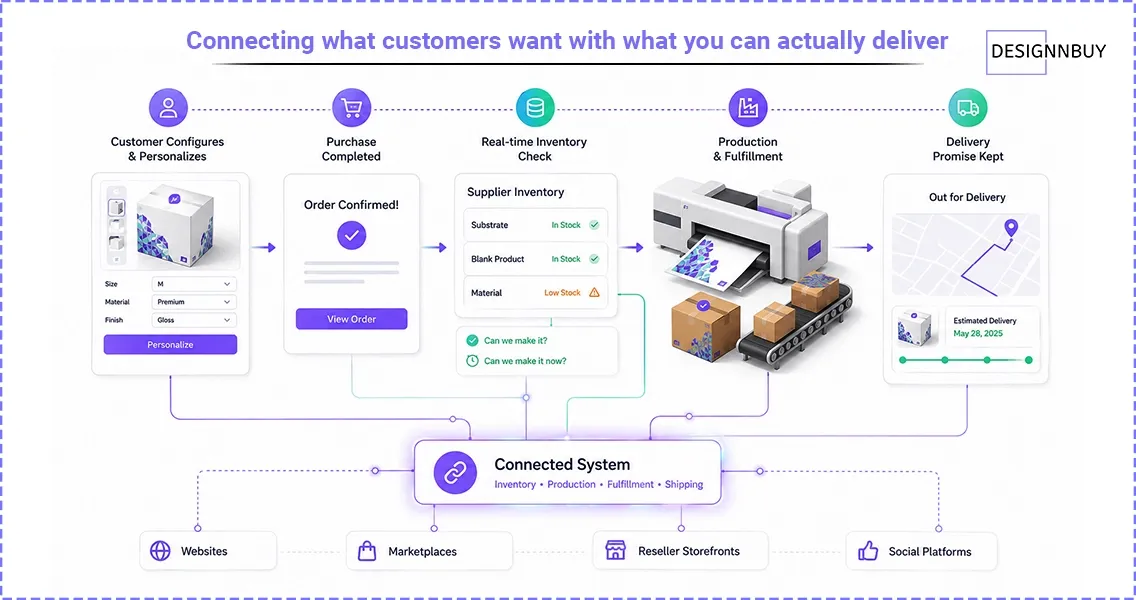 Imagine letting a customer personalise and configure a product, spend time getting everything exactly right, complete the purchase — and then discover that the required substrate, blank product or material isn’t available.
That’s not just an inventory problem.
That’s a broken customer experience.
Connecting the storefront with real-time supplier inventory can close that gap. The system increasingly needs to understand not just:
“What does the customer want?”
but also:
“Can we make it?”
and perhaps even more importantly:
“Can we make it now?”
This is where web-to-print starts becoming much more than a design problem. It becomes a connected commerce and manufacturing ecosystem where personalisation, inventory, production, fulfilment and shipping need to work as parts of the same journey.
Because the customer doesn’t care where the design platform ends, the supplier system begins or the fulfilment platform takes over. They simply expect the product they configured and paid for to arrive as promised.
And as commerce spreads across websites, marketplaces, reseller storefronts and social platforms, the technology underneath needs to connect those moving parts just as seamlessly.
The opportunity isn’t just helping customers design what they want. It’s knowing whether you can produce and deliver it — before they click Buy.
So, where is the moat now?
If personalisation and online design are becoming table stakes, what should businesses actually compete on?
For me, the answer increasingly comes down to one word:
Friction
How much friction can you remove between a customer’s idea and the finished product?
Can they create artwork without being a designer?
Can they personalise without learning complicated software?
Can they configure a complex product without understanding production?
Can they confidently see what they’re buying?
Can the system catch problems before production?
Can they order one unit economically?
Can the system know whether the required inventory is available?
Can that order move into production automatically?
Can it be fulfilled regardless of where the customer bought it?
And when that customer comes back tomorrow, can the whole experience be even easier?
That’s where I believe the moat is moving.
The rise of the invisible design experience. There’s an interesting paradox in all of this. The better the technology becomes, the less visible the design tool itself may become. The future customer may not even realise they are using a “design tool.”
They may simply: Describe → Configure → Preview → Buy.
Behind those four simple steps, a lot could be happening.
AI creates or improves the artwork. The system understands the product specifications. A configuration engine calculates the dimensions. A 3D engine creates the preview. Preflight validates the artwork. Production systems determine how to manufacture it. Inventory systems confirm availability. Fulfilment takes over from there.
To the customer, however, none of that complexity matters. They just got what they wanted. And perhaps that’s the real evolution of web-to-print. The best design experience may ultimately be the one the customer barely notices.
The moat didn’t disappear. It moved.
Looking back at the last 15 years, I don’t think the design tool became less important.
It simply became less defensible.
Personalisation is still fundamental. Design is still fundamental. But as these capabilities become more accessible and increasingly expected by customers, they are no longer enough on their own to differentiate one business from another.
The competitive advantage is moving beyond the editor — into everything that makes the journey from an idea to a finished product faster, simpler and more reliable.
From creation to configuration.
From preview to preflight.
From production to fulfilment.
From storefront to supply chain.
And ultimately, from a tool that helps customers design something to a platform that helps them successfully get what they want.
Fifteen years ago, the question was:
“Can your customers personalise a product?”
Today, I think the better question is:
“How much of the complexity can your technology take away from them?”
The industry is moving from selling personalisation to delivering outcomes.
And perhaps that’s the biggest shift of all.
When the design tool becomes infrastructure, the moat is no longer the tool. The moat is everything you build around it.
Frequently Asked Questions
See what "everything around the tool" looks like in practice
Nidhi Agarwal
Co-founder | CEO, DesignNBuy
Nidhi Agarwal (Co-founder/CEO, DesignNBuy) is a tech entrepreneur specializing in print industry innovation for the past 15+ years. Known for her strategic problem-solving, she defines the company’s roadmap and is a leading voice in web-to-print technology.
All Posts
Trusted by 2000+ Print Businesses
Ready to See It in Action?
Explore our print shop platform at your convenience. Request a demo URL to experience the storefront, design tool, pricing, and much more.