


Product packaging today is expected to do more than carry information or branding. It also helps customers judge whether a product is safe to use and whether it has remained untouched from the time it was sealed to the moment it reaches them. This is where tamper evident labels make it easier to see if a product is safe.
Because of this shift, tamper indication has become a standard requirement across many industries, especially where safety, compliance, and evolving regulations are involved. In many cases, web to pack solutions support how labels and packaging are designed and ordered.
For businesses, this means fewer doubts during handling, transport, and storage, and for customers, it means reassurance before use.
In fact, 79% of consumers are more likely to purchase from brands that show safety in their packaging, making visible tamper evidence an important part of how products are presented.
What Are Tamper Evident Labels and How Do They Work?
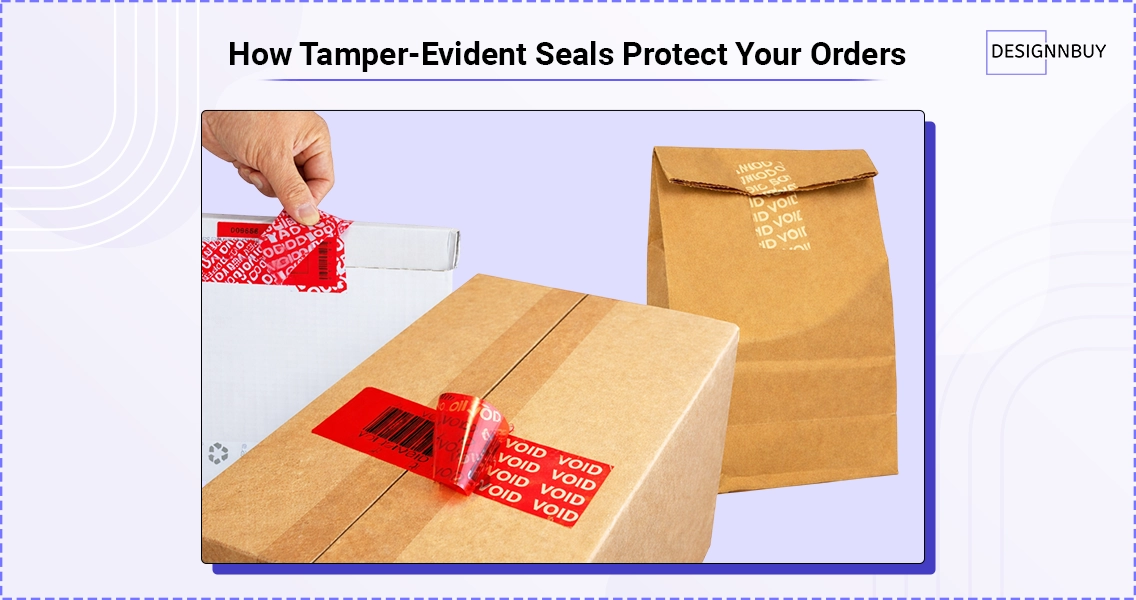
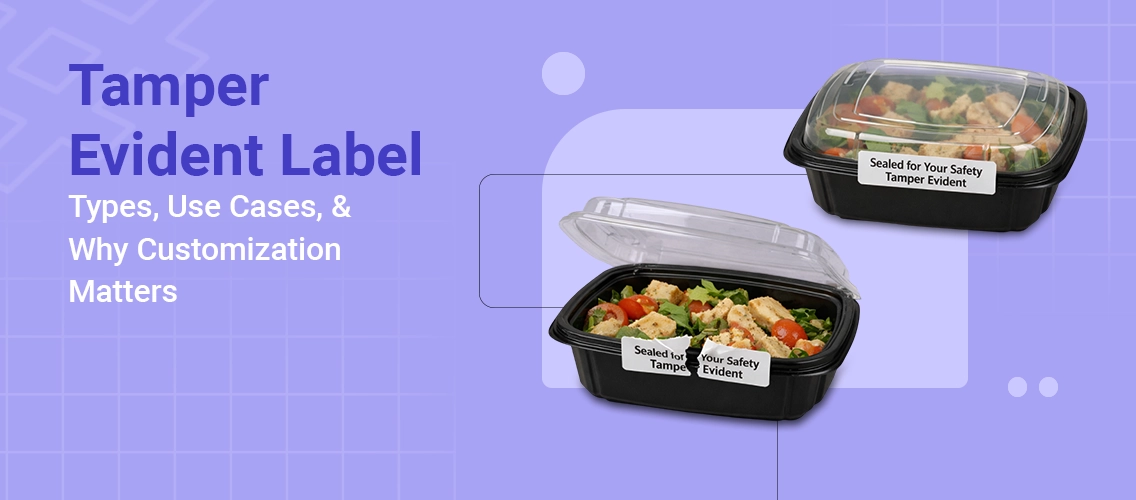
Tamper evident labels are specially designed security seals that show clear signs of damage or alteration when someone attempts to remove or tamper with them. Once applied, these labels cannot be lifted or repositioned without leaving visible evidence.
They work through a combination of special materials, adhesives, and design techniques that react instantly when disturbed. The moment the label is peeled, broken, or torn, it reveals an irreversible change that signals tampering.
Common tamper-evident behaviors include:
- Leaving behind a “VOID” message or pattern on the surface
- Breaking into multiple pieces when removal is attempted
- Tearing along perforations that cannot be resealed
- Showing visible disruption in fragile or destructible films
These changes are immediate and unmistakable, allowing anyone, from warehouse staff to end customers – to quickly identify whether a package has been compromised.
Common Types of Tamper Evident Labels
Tamper evident labels come in different types because packaging needs are not the same for every product. A label that works well on a medicine bottle may not work on cartons, pouches, or shipping boxes.
Each label type behaves differently once applied, based on the surface, adhesive, and packaging shape.
Designing these labels accurately often requires tools like DesignO, which allows print businesses to plan layout, placement, and behavior before labels go into production.
Tamper Evident Void Labels
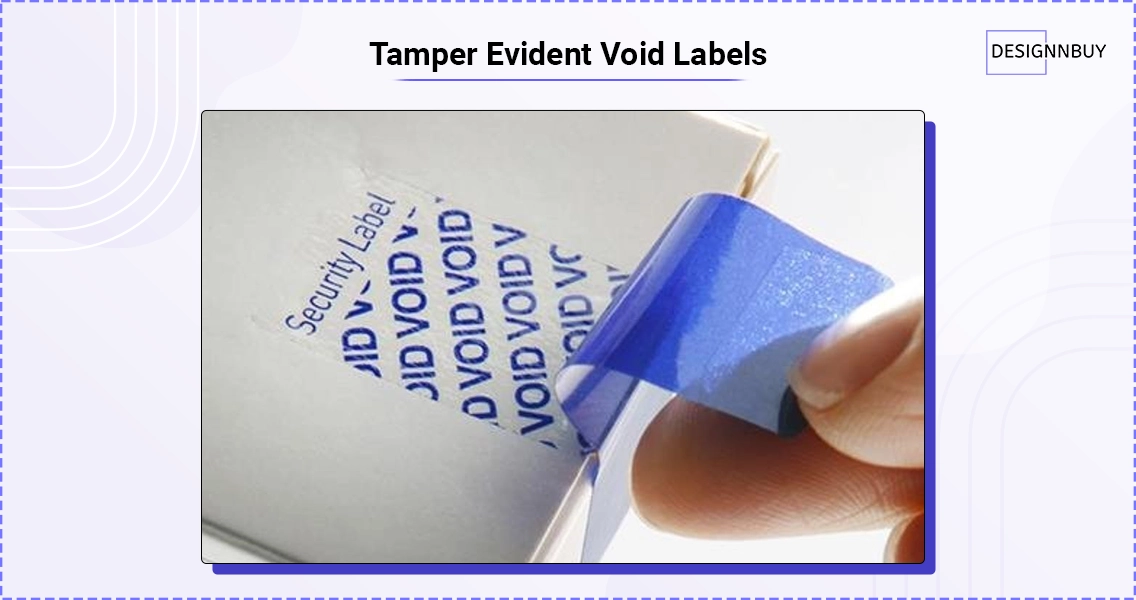
These labels reveal a hidden message when removal is attempted.
Where they are used
- Display messages such as “VOID” or “OPENED” after removal
- Leave the message on the surface as visible proof
- Used when clear visual indication matters more than physical breakage
Why design rules matter
- The reveal message must appear clearly after removal
- Contrast and spacing affect readability
- Poor placement can weaken the security signal
Destructible Labels
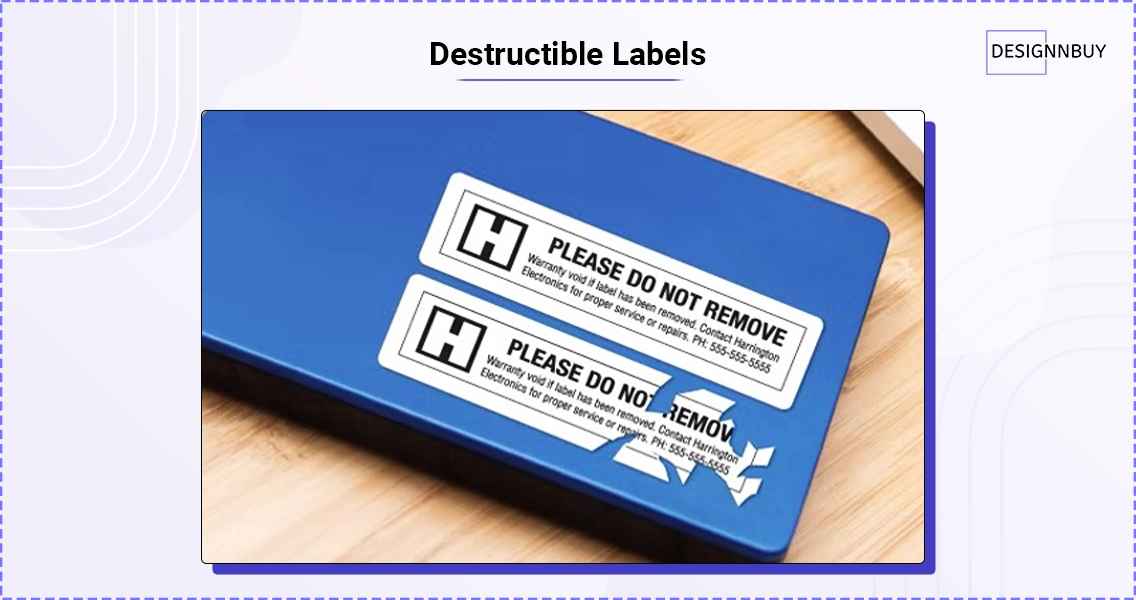
These labels tear or fragment when someone attempts to remove them.
Where they are used
- Made from fragile materials that break during removal
- Cannot be reapplied once damaged
- Common in pharmaceutical and regulated packaging
Why design rules matter
- The design must support controlled tearing
- Surface texture impacts how the label breaks
- The same design may behave differently on glass, paper, or plastic
Seal Labels
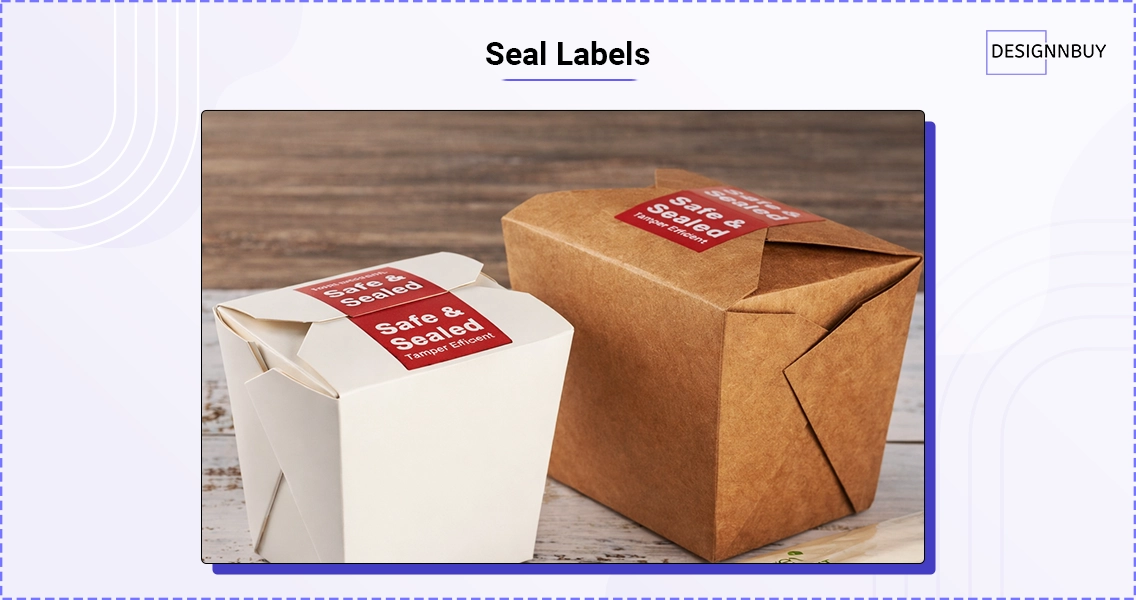
These labels secure package openings and break when the package is opened.
Where they are used
- Applied across flaps, lids, or carton edges
- Break immediately upon opening
- Used in food, beverage, and logistics packaging
Why design rules matter
- Accurate alignment is critical
- Even small placement errors reduce effectiveness
- Design must guide correct positioning across closures
Film-Based Tamper Seals
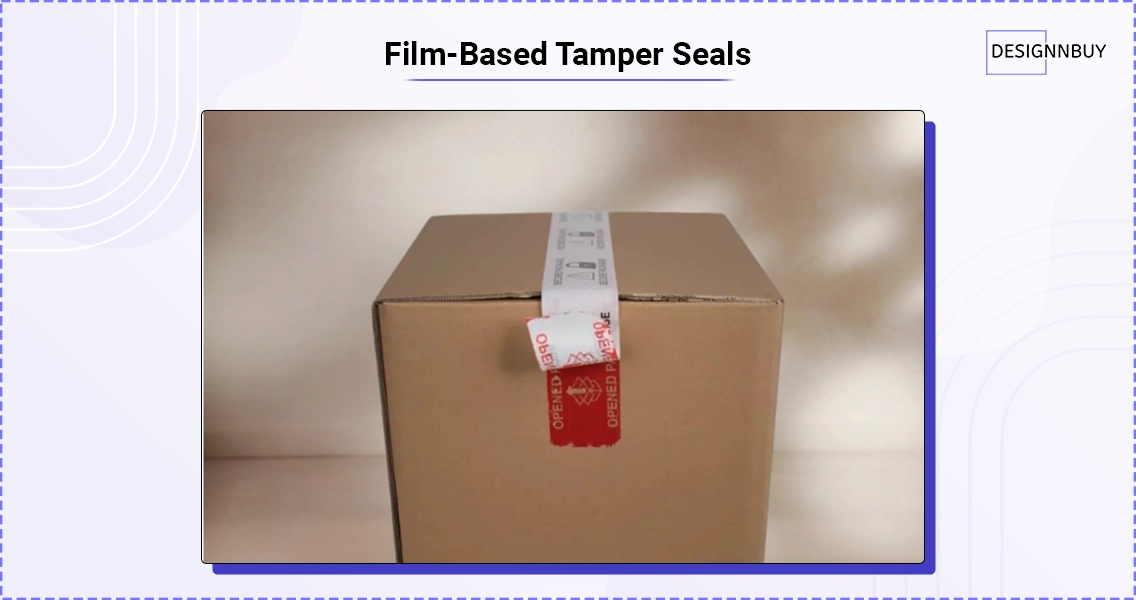
These labels adapt to flexible or curved packaging surfaces.
Where they are used
- Applied to bottles, pouches, and cosmetic packages
- Maintain adhesion on non-flat surfaces
- Show visible damage if disturbed
Why design rules matter
- Designs must remain visible on curved surfaces
- Material flexibility affects performance
- Layout must hold shape without losing clarity
All of these options fall under tamper-evident packaging, and their effectiveness depends on proper label design, placement, and material selection. Using professional label design software helps ensure labels are designed correctly and perform as expected.
Where Tamper Evident Labels Are Used
In shipping and storage, these labels act as tamper evident asset labels that show whether a package was opened during transit.
While the purpose stays the same, how these labels are applied depends on the packaging type and handling conditions.
Common packaging situations
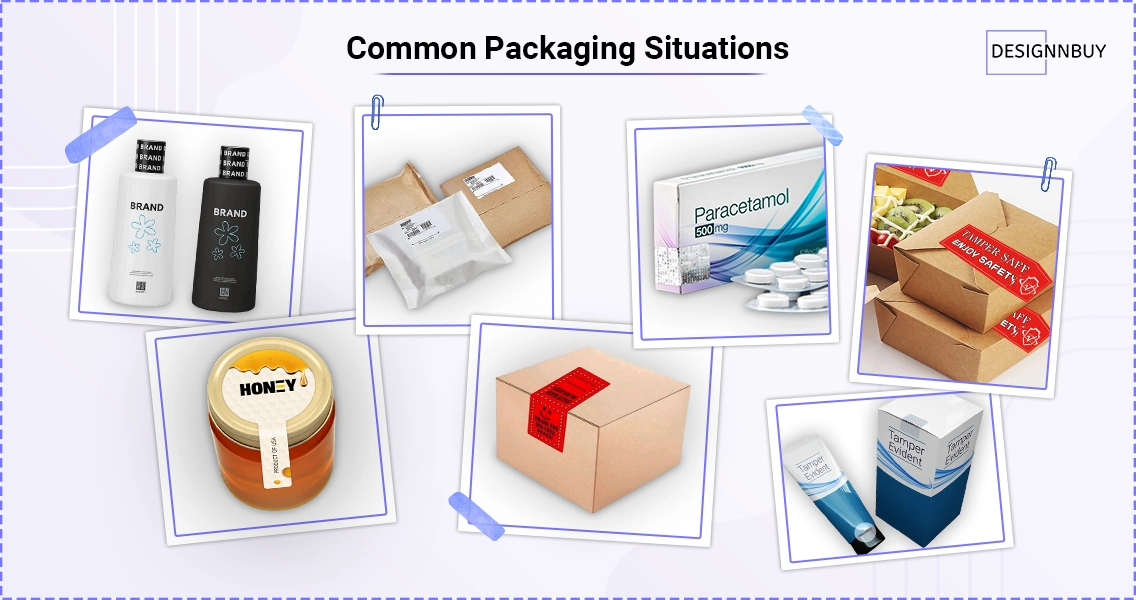
- Bottles, jars, and containers that require visible access checks including bottle label printing
requirements - Cartons and boxes handled across multiple stages
- Retail and shipped packages that need quick visual inspection
Industries that rely on tamper evident labeling
- Cosmetics and personal care
- Pharmaceutical products
- eCommerce and logistics
- Food and beverage packaging
For corrugated packaging, box structure also matters, especially when labels are applied across flaps or edges, which is why understanding standard box styles such as FEFCO box styles helps.
Custom Tamper Evident Labels with Variable Data
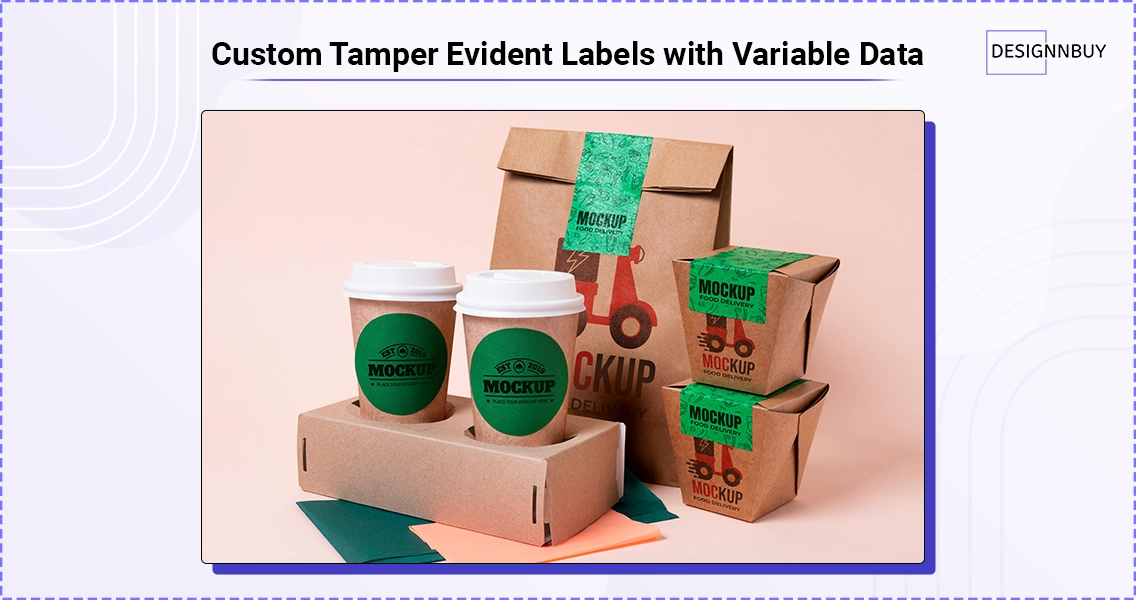
Tamper evident labels go beyond standard formats to match real product needs.
- Custom tamper evident labels are designed based on package size, shape, and material
- Proper sizing and material selection help the label stay visible and effective
- Variable data, such as batch numbers and serials, adds traceability to each label
- Serials and batch data help reduce duplication and support recalls
- Repeat orders need the same data structure and layout every time
- Manual handling of variable data often leads to errors
Using custom tamper evident labels with variable data prepares the ground to meet label printing demands of brands.
Why Designing and Ordering Tamper Evident Labels Needs Configuration
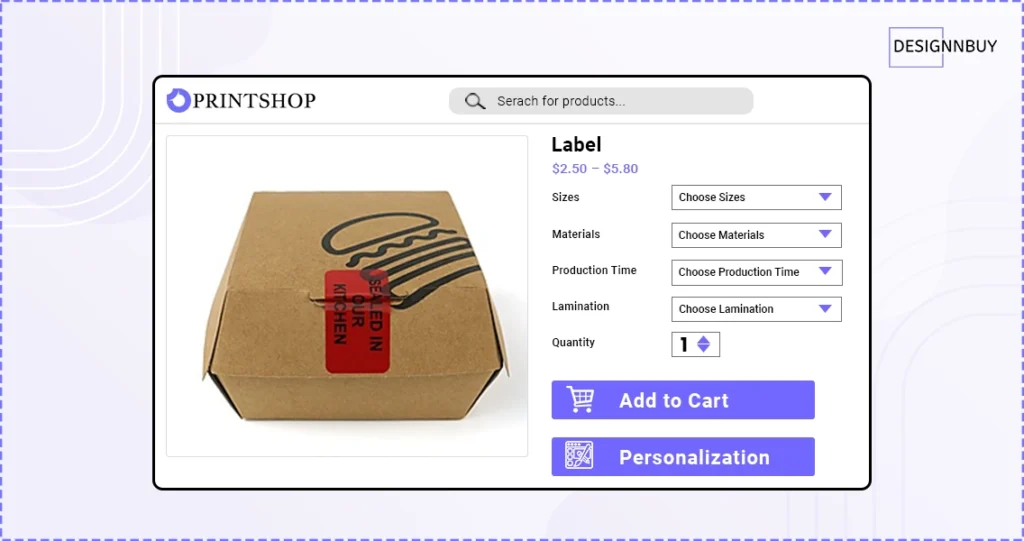
As label options increase, managing them without a system becomes difficult.
- Too many choices to track
Sizes, materials, finishes, and data variations quickly add complexity when handled manually. - Pricing changes with every selection
Label size, quantity, and material directly affect cost, making manual pricing unreliable. - Reorders create avoidable mistakes
Small differences in versions or data often lead to approval delays and reprint issues.
Having a structured setup helps avoid confusion. Using top label design software for print shops with built-in rules helps teams manage choices, keep pricing consistent, and reduce repeat-order mistakes.
Closing Thoughts: Getting Tamper Evident Labels Right
Tamper evident labels only work when they are designed and applied with real packaging conditions in mind. The label type, material, placement, and data all need to align with how the product is stored, shipped, and opened.
As brands move toward more customization and repeat orders, using reliable label design software for design accuracy and consistency becomes important.
For print businesses and brands exploring new product label design ideas or planning to start a label printing business, understanding how tamper evident labels are designed and managed is essential. Getting this right reduces errors, supports repeat orders, and ensures labels perform their purpose every time.
For growth tactics and scaling tips, see our post on label printing growth hacks for printers.
Avoid Label Failures Before They Reach Production
Tamper evident labels demand precision in design, placement, and data handling. DesignNBuy helps you configure label options correctly so every order, first-time or repeat, performs as expected.
Frequently Asked Questions
A tamper-evident label is a security label designed to show visible signs if a product has been opened or altered. Once applied, it cannot be removed or repositioned without leaving clear evidence, such as tearing, breakage, or a visible message.
A common example of a tamper-evident label is a void label that reveals the word “VOID” when removed. Other examples include destructible labels that break apart and seal labels placed across package openings.
Tamper-evident labels are commonly used in food and beverage packaging, pharmaceutical products, cosmetics and personal care items, and eCommerce shipments where product integrity needs to be visible.
Tamper-evident labels help show whether a product has been opened before use. They support safety, build customer trust, and reduce risks during storage, transport, and handling.